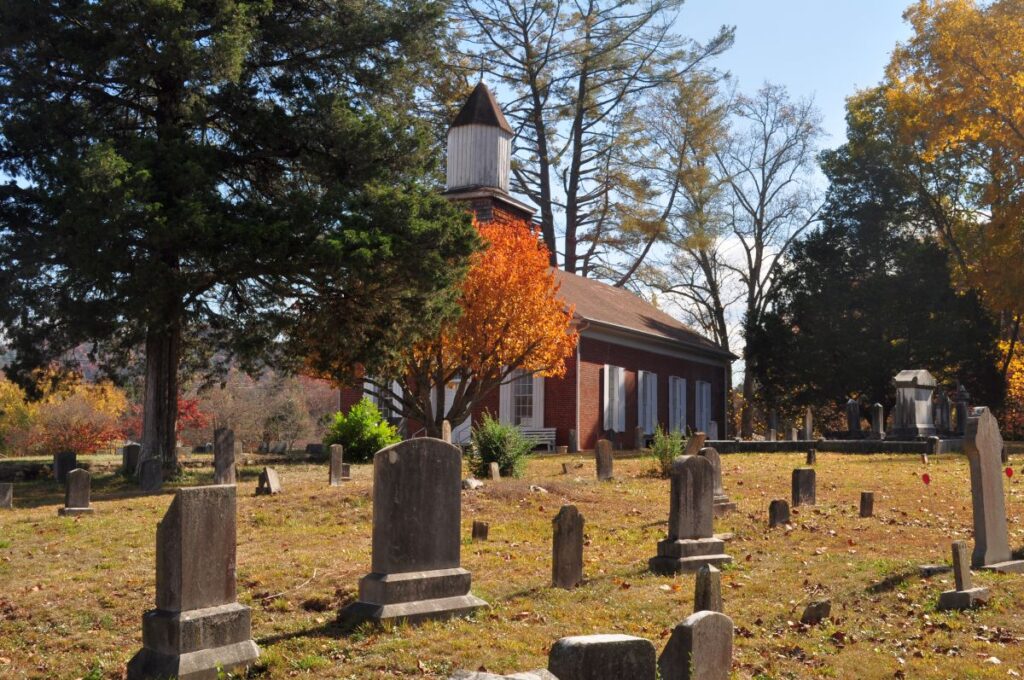
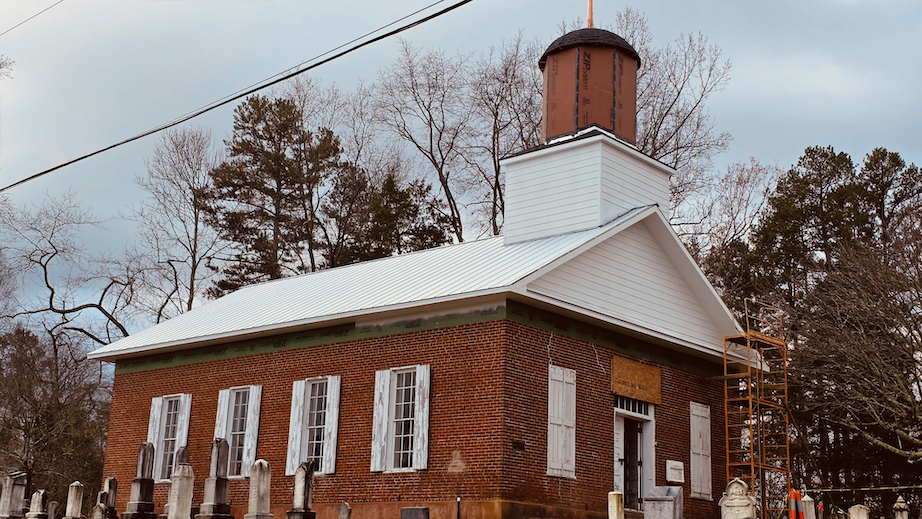
Harshaw Chapel and its cemetery serve as substantial reminders of our church’s long history in Murphy. Located atop a hill at 150 Church Street downtown, the chapel is the town’s only surviving example of mid-nineteenth century brick architecture.
Around 1835, Joshua Harshaw, son of Abraham Harshaw, settled in this area. A wealthy first settler, he purchased a considerable amount of land in the first land sales. In 1844 Harshaw granted land to Morris K. Taylor, Sutton Talley, and John R. Black, Trustees, for the purpose of erecting a place of worship for those of the Methodist faith. Although the beginnings of Methodist Church activities in Murphy are vague, we know from the records of the Holston Conference that the first pastor was assigned to Murphy in 1858.
Eleven years after Harshaw’s grant to the Trustees, construction was completed, and on May 1, 1869, Joshua Harshaw presented to the Methodist Episcopal Church South the meeting house known as Harshaw Chapel.
Built of of locally made brick, the Chapel still stands on the original site on Church Street. It survives as one of the oldest church buildings in Cherokee County, the oldest building in the Town of Murphy, and the oldest brick structure in the county. Reports indicate that the original furnishings were far more elaborate than those of any earlier place of worship in the area.
The picturesque cemetery that surrounds the Chapel contains graves of many recognizable names, including that of Abraham (Abram) Enloe , whom some believe to be the biological father of Abraham Lincoln. Other gravestones mark the resting places of Joshua Harshaw and his family and other well known settlers. A walk through the cemetery reveals a number of beautiful Victorian markers – some dated as early as 1840. John Wesley, founder of Methodism, often referred to the great cloud of witnesses, and this cemetery brings them to mind.
In 1923 the congregation dedicated a new, larger house of worship on Valley River Avenue, and in 2023 a celebration marked that newer building’s centennial. Responsibility for Harshaw Chapel and cemetery had, since the 1920’s, passed to different entities, but Murphy First now cares for this historic place.
THE CHAPEL TODAY
By the turn of the 21st century the steeple had become unstable; the steep roof sagged. It appeared that if a heavy, wet snowstorm occurred, the roof could collapse. Inspectors found that wood timbers in the attic and bell tower had rotted beyond repair and advised church officials not to ring the bell, as the shifting weight could bring the bell, steeple, and roof down.
In December 2019 the steeple was removed and its bell stored away. Temporary cover protected the roof against the weather until sufficient funding could be raised to execute needed repairs.
In late 2020, the national non-profit Partners for Sacred Places reached out to Murphy FUMC, inviting us to apply for their Central Appalachia program, which assists with preserving folk art, architecture, and cultural traditions through repair and restoration work, engaging local artists, craftspeople, and artisans. Initial and subsequent grants from Partners have gone far to sustain the chapel’s historic presence in the community.
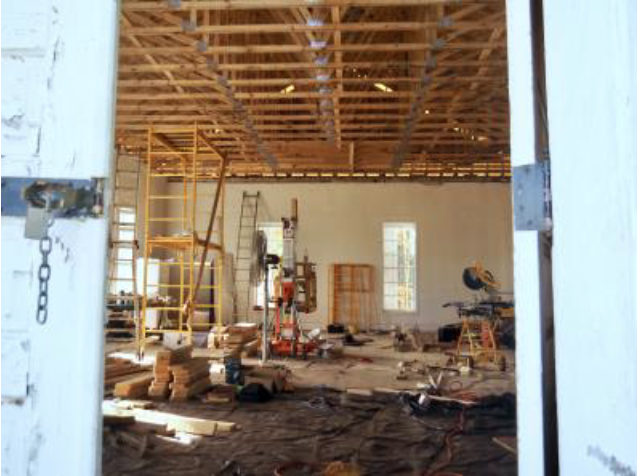
Chapel interior as seen during roof restoration, August 2025.
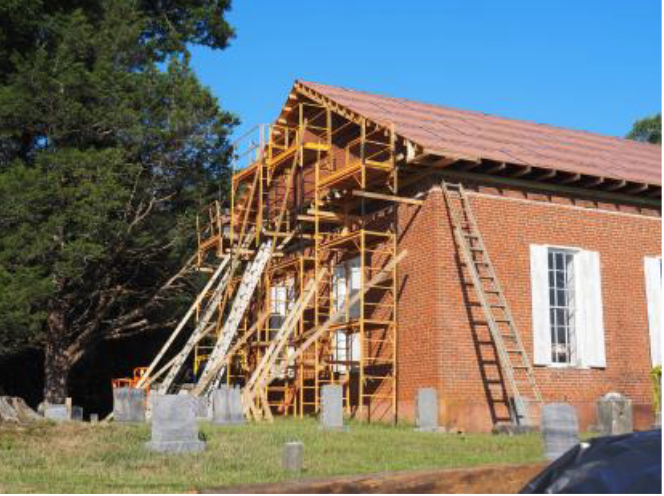
Roof restoration as it appeared in August 2025.
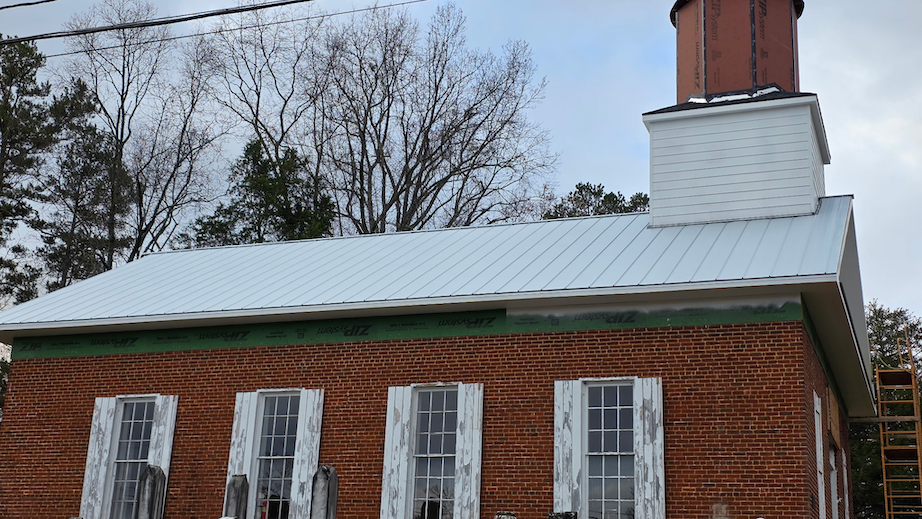
Chapel roof restoration as it appeared in November 2025.
Roof, facia, and gable progress, November 2025.
Later, the Cherokee County Tourism Authority supplied additional funding. Roof replacement proceeded under the leadership of local resident Wolfgang Raffler in 2025 in accordance with historic preservation guidelines. By November 2025, as shown in photos above, the roof, facia, and end gables were restored, and work on the interior ceiling and lighting as well as bathroom and utility room were well on the way toward completion.
While we benefit from the expertise, knowledge, and support that organizations have brought to the table along with fundraising and ongoing private donations, there is still much work ahead. Your donation can help.